
Incomlend Capital Launches Variable Capital Company (VCC)
Incomlend Capital launches its Singapore-regulated Variable Capital Company (VCC), offering institutional investors a flexible and transparent investment structure.

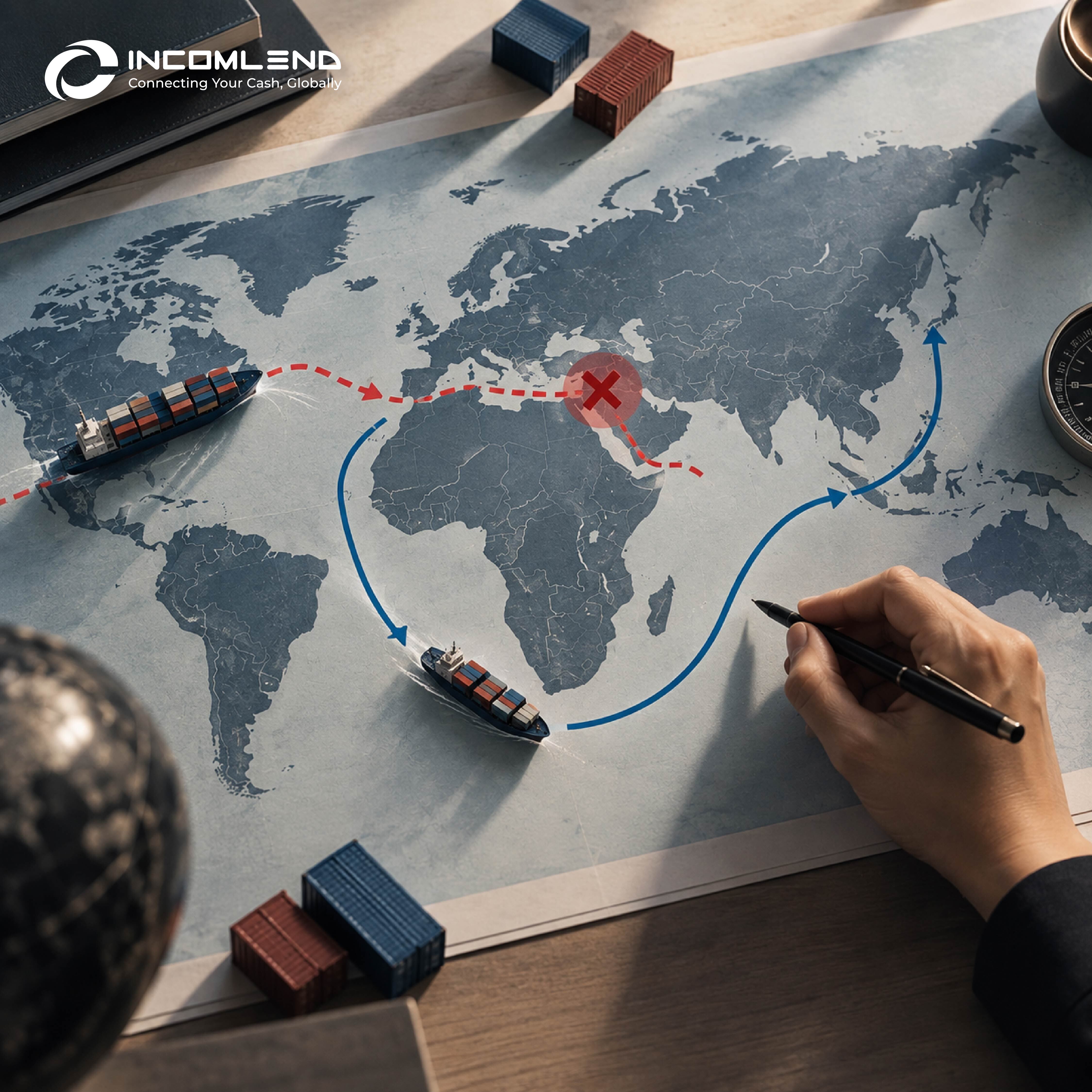
A shipment can remain commercially profitable while becoming financially impossible to complete. A shipping diversion delays delivery, a supplier demands earlier payment, and the buyer’s payment clock starts only when the goods arrive.
For exporters and importers, geopolitical shocks reach far beyond transport. Conflict, tariffs and export restrictions can simultaneously affect sourcing, delivery costs, customer demand and cash flow.
The impact is measurable. UNCTAD’s 2025 maritime review reports that seaborne trade volumes grew 2.2% in 2024, while transport work measured in ton-miles increased 5.9%, reflecting longer journeys. More distance means more time and resources committed to moving goods. UNCTAD
Building supply chain resilience requires understanding where disruption would hurt most, preparing workable alternatives and securing the money to use them.
1. Find the dependencies hidden behind your suppliers
Buying from several suppliers provides limited protection if they depend on the same factory, raw material source or shipping chokepoint.
The UK government’s June 2026 supply chain report highlights how interconnected production networks can conceal vulnerabilities that national trade figures miss. For individual businesses, this means looking beyond the company issuing the invoice. UK Government
Start with products whose absence would stop production or threaten an important customer relationship. Map:
Rank each exposure by its business impact and replacement time. A low-cost component that takes four months to replace may deserve more attention than an expensive product available from several qualified sources.
2. Build alternatives you can actually activate
A supplier shortlist becomes useful only when the alternatives can deliver acceptable goods within a workable timeframe.
Before disruption occurs, test samples, verify capacity, agree specifications and complete a trial order. Establish whether the alternative supplier could increase production when other customers are also seeking replacement capacity.
Geographical diversification matters, but distance alone says little about independence. Two suppliers in neighbouring countries may share the same upstream producer.
Bringing everything closer to home also carries trade-offs. OECD modelling found that widespread supply chain relocalisation could reduce global trade by over 18%, without consistently improving resilience. This is a modelled scenario, not a forecast. OECD
For importers, a practical approach is to qualify a second source for critical goods. For exporters, diversification should also include customers and destination markets, reducing dependence on one country’s demand or trade policy.
3. Compare routes by their full commercial cost
The cheapest freight quote can become expensive when it extends inventory holding periods or causes missed deliveries.
Ask logistics partners to prepare alternatives covering different ports, carriers and transport modes. Compare the complete journey, including inland transport, customs clearance and destination handling.
For each option, assess:
Set decision points in advance. For example, agree when a delivery delay justifies splitting a shipment or using air freight for a small, urgent quantity.
Confirm that alternative routes remain commercially available. A contingency plan based on unconfirmed capacity may fail precisely when demand for that capacity rises.
4. Put inventory buffers where failure is most expensive
Holding extra stock across every product can consume cash and increase storage losses. Target buffers at goods that are essential, difficult to substitute or slow to replenish.
Consider replacement lead time, demand variability, shelf life and the cost of a stockout. Then compare how long existing inventory would last with how long an alternative source would take to deliver.
If stock covers three weeks but replacement supply needs eight, the business has a five-week exposure to address.
The response might combine additional inventory, reserved supplier capacity and approved substitute products. Review these arrangements regularly as demand and lead times change.
5. Check whether the transaction still works legally and commercially
A new supplier or route can change the compliance requirements of a transaction.
Before committing, verify applicable sanctions, export controls, product approvals and origin requirements with the relevant authorities or advisers. Where US rules apply, the Consolidated Screening List supports counterparty screening, but it does not replace the wider compliance assessment.
Contracts also need practical attention. Clarify responsibility for additional freight, storage charges, delivery changes and customer notification. Check insurance exclusions and whether route changes require insurer approval.
Keep commercial documents consistent with the actual transaction. When sourcing or routing changes, outdated paperwork can create another delay.
6. Fund the longer trade cycle
Every resilience measure has a cash consequence. Additional stock requires funding. A replacement supplier may demand a deposit. Longer transit can postpone resale and collection.
Consider an illustrative importer purchasing US$300,000 of goods monthly. If an extra 20 days in transit delays sales and collections equally, with supplier payment dates unchanged, approximately US$200,000 more could remain tied up in the operating cycle: US$300,000 ÷ 30 days × 20 extra days, before additional charges.
Stress-test that funding requirement alongside higher freight costs and slower customer payments. Establish financing before the disruption forces an urgent decision.
Export receivables finance can release cash from eligible unpaid invoices, while production and supplier deposits may require separate funding. The International Trade Administration’s guide explains these distinctions.
Review buyer limits, advance rates, fees and repayment dates against the stressed scenario.
Make the response executable
Bring procurement, logistics, sales and finance together for a short disruption exercise. Assume a critical route closes for 30 days. Identify who changes bookings, approves extra spending, contacts customers and confirms funding.
Record the decisions, owners and deadlines. Repeat the exercise when a major supplier, market or route changes.
Why partner with Incomlend?
Incomlend helps exporters release working capital from eligible export receivables and enables importers to pay suppliers early after shipment while benefiting from extended repayment terms. Financing is subject to approval and agreed terms.
Discuss funding alongside sourcing and logistics, so your business can afford to activate its alternatives when disruption arrives.
Stay informed with expert tips, financial advice, and the latest updates to help you navigate your financial journey.